Myths about COVID

FACT: Hand sanitizers can be used often

An alcohol-based sanitizer does not create antibiotic resistance. Unlike other antiseptics and antibiotics, pathogens (harmful germs) do not seem to develop resistance to alcohol-based sanitizers. 

T shirts https://amzn.to/2RXckWA

FACT: Alcohol-based sanitizers are safe for everyone to use

Alcohols in the sanitizers have not been shown to create any relevant health issues. Little alcohol is absorbed into the skin, and most products contain an emollient to reduce skin dryness. Allergic contact dermatitis and bleaching of hand hair due to alcohol are very rare adverse effects. Accidental swallowing and intoxication have been described in rare cases. 

Best book to change ur mindset Click to buy 👉 https://ern.li/OP/ivgkopr5d5l

Study reveals the Great Pyramid of Giza can focus electromagnetic energy

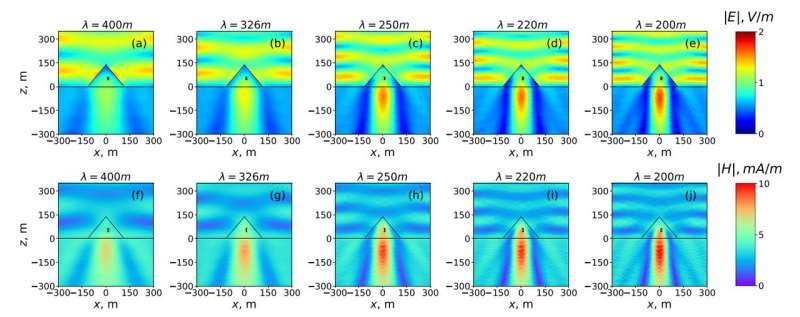
An international research group has applied methods of theoretical physics to investigate the electromagnetic response of the Great Pyramid to radio waves. Scientists predicted that under resonance conditions, the pyramid can concentrate electromagnetic energy in its internal chambers and under the base. The research group plans to use these theoretical results to design nanoparticles capable of reproducing similar effects in the optical range. Such nanoparticles may be used, for example, to develop sensors and highly efficient solar cells. The study was published in the Journal of Applied Physics.

While Egyptian pyramids are surrounded by many myths and legends, researchers have little scientifically reliable information about their physical properties. Physicists recently took an interest in how the Great Pyramid would interact with electromagnetic waves of a resonant length. Calculations showed that in the resonant state, the pyramid can concentrate electromagnetic energy in the its internal chambers as well as under its base, where the third unfinished chamber is located.

These conclusions were derived on the basis of numerical modeling and analytical methods of physics. The researchers first estimated that resonances in the pyramid can be induced by radio waves with a length ranging from 200 to 600 meters. Then they made a model of the electromagnetic response of the pyramid and calculated the extinction cross section. This value helps to estimate which part of the incident wave energy can be scattered or absorbed by the pyramid under resonant conditions. Finally, for the same conditions, the scientists obtained the electromagnetic field distribution inside the pyramid.

In order to explain the results, the scientists conducted a multipole analysis. This method is widely used in physics to study the interaction between a complex object and electromagnetic field. The object scattering the field is replaced by a set of simpler sources of radiation: multipoles. The collection of multipole radiation coincides with the field scattering by an entire object. Therefore, knowing the type of each multipole, it is possible to predict and explain the distribution and configuration of the scattered fields in the whole system.

The Great Pyramid attracted the researchers while they were studying the interaction between light and dielectric nanoparticles. The scattering of light by nanoparticles depends on their size, shape and refractive index of the source material. Varying these parameters, it is possible to determine the resonance scattering regimes and use them to develop devices for controlling light at the nanoscale.

“Egyptian pyramids have always attracted great attention. We as scientists were interested in them as well, so we decided to look at the Great Pyramid as a particle dissipating radio waves resonantly. Due to the lack of information about the physical properties of the pyramid, we had to use some assumptions. For example, we assumed that there are no unknown cavities inside, and the building material with the properties of an ordinary limestone is evenly distributed in and out of the pyramid. With these assumptions made, we obtained interesting results that can find important practical applications,” says Dr. Sc. Andrey Evlyukhin, scientific supervisor and coordinator of the research.

Now, the scientists plan to use the results to reproduce similar effects at the nanoscale. “Choosing a material with suitable electromagnetic properties, we can obtain pyramidal nanoparticles with a promise for practical application in nanosensors and effective solar cells,” says Polina Kapitainova, Ph.D., a member of the Faculty of Physics and Technology of ITMO University.

bacteria with metal diet discovery in dirty glassware

Caltech microbiologists have discovered bacteria that feed on manganese and use the metal as their source of calories. Such microbes were predicted to exist over a century ago, but none had been found or described until now.

“These are the first bacteria found to use manganese as their source of fuel,” says Jared Leadbetter, professor of environmental microbiology at Caltech who, in collaboration with postdoctoral scholar Hang Yu, describes the findings in the July 16 issue of the journal Nature. “A wonderful aspect of microbes in nature is that they can metabolize seemingly unlikely materials, like metals, yielding energy useful to the cell.”

The study also reveals that the bacteria can use manganese to convert carbon dioxide into biomass, a process called chemosynthesis. Previously, researchers knew of bacteria and fungi that could oxidize manganese, or strip it of electrons, but they had only speculated that yet-to-be-identified microbes might be able to harness the process to drive growth.

WLeadbetter found the bacteria serendipitously after performing unrelated experiments using a light, chalk-like form of manganese. He had left a glass jar soiled with the substance to soak in tap water in his Caltech office sink before departing for several months to work off campus. When he returned, the jar was coated with a dark material.

“I thought, ‘What is that?’” he explains. “I started to wonder if long-sought-after microbes might be responsible, so we systematically performed tests to figure that out.”

The black coating was in fact oxidized manganese generated by newfound bacteria that had likely come from the tap water itself. “There is evidence that relatives of these creatures reside in groundwater, and a portion of Pasadena’s drinking water is pumped from local aquifers,” he says.

Manganese is one of the most abundant elements on the surface of the earth. Manganese oxides take the form of a dark, clumpy substance and are common in nature; they have been found in subsurface deposits and can also form in water-distribution systems.

“There is a whole set of environmental engineering literature on drinking-water-distribution systems getting clogged by manganese oxides,” says Leadbetter. “But how and for what reason such material is generated there has remained an enigma. Clearly, many scientists have considered that bacteria using manganese for energy might be responsible, but evidence supporting this idea was not available until now.”

The finding helps researchers better understand the geochemistry of groundwater. It is known that bacteria can degrade pollutants in groundwater, a process called bioremediation. When doing this, several key organisms will “reduce” manganese oxide, which means they donate electrons to it, in a manner similar to how humans use oxygen in the air. Scientists have wondered where the manganese oxide comes from in the first place

Thanks for reading ,. may it help you to you gain knowledge ⚡🖤

A new way to control experimentation with dreams.

The study of dreams has entered the modern era in exciting ways, and researchers from MIT and other institutions have created a community dedicated to advancing the field, lending it legitimacy and expanding further research opportunities

In a new paper, researchers from the Media Lab’s Fluid Interfaces group introduce a novel method called “Targeted Dream Incubation” (TDI). This protocol, implemented through an app in conjunction with a wearable sleep-tracking sensor device, not only helps record dream reports, but also guides dreams toward particular themes by repeating targeted information at sleep onset, thereby enabling incorporation of this information into dream content. The TDI method and accompanying technology serve as tools for controlled experimentation in dream study, widening avenues for research into how dreams impact emotion, creativity, memory, and beyond